It's one of our core values — we lean in, and we see possibility where others see disruption. Building our own system, on our own terms, is that value in action.
De Bono's Six Thinking Hats — one topic, looked at six different ways. Today we wear just two: the yellow hat (optimism) and the green hat (creativity). We're here to look at what's possible.
The upside. What's genuinely great about this.
New ideas. “What if we…” — dream a little.
The risks, the doubts, why it won't work.
Just the data and the numbers.
Gut reactions and instincts.
The plan, the steps, the how.
Three groups feel our software every day. When the tools are a mess, the frustration lands on the team — and it shouldn't. This is about fixing that, for all three.
Less busywork — and less getting blamed for things the system should just handle.
Clear, quick information on their most valuable assets — the service that keeps them with us.
The fast, no-phone-tag experience today's renters actually expect.
Every time we hit a problem, we bought another piece of software. AppFolio, LeadSimple, ShowMojo, a dozen more — sixteen logins, $411,000 a year, and none of them talk to each other. The team ends up entering the same thing three times and chasing whatever falls through the cracks.
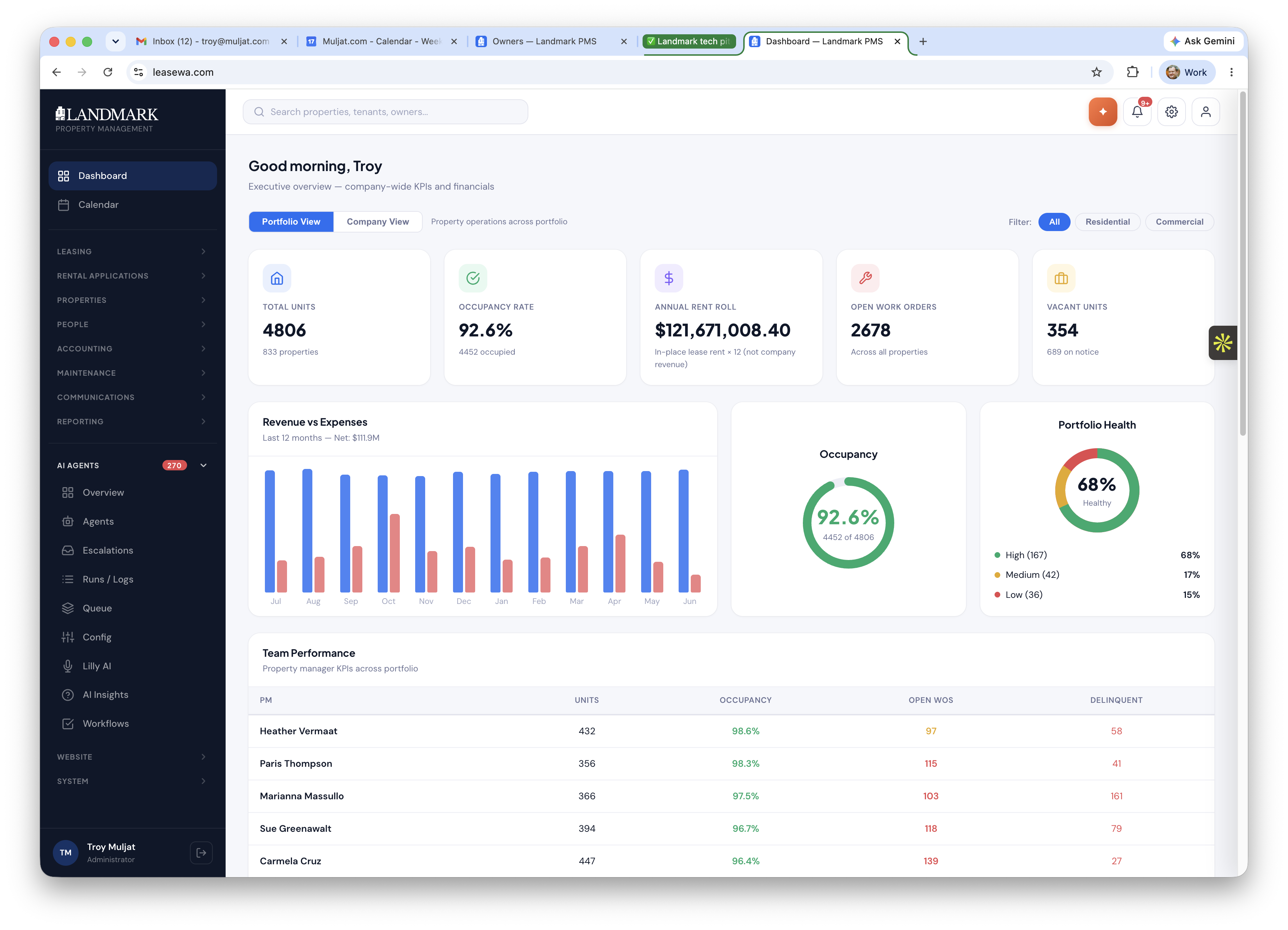
Instead of sixteen tools stitched together, one Landmark system that does everything AppFolio does and then some — a very smart, agentic version of Landmark, built around the way we actually work.
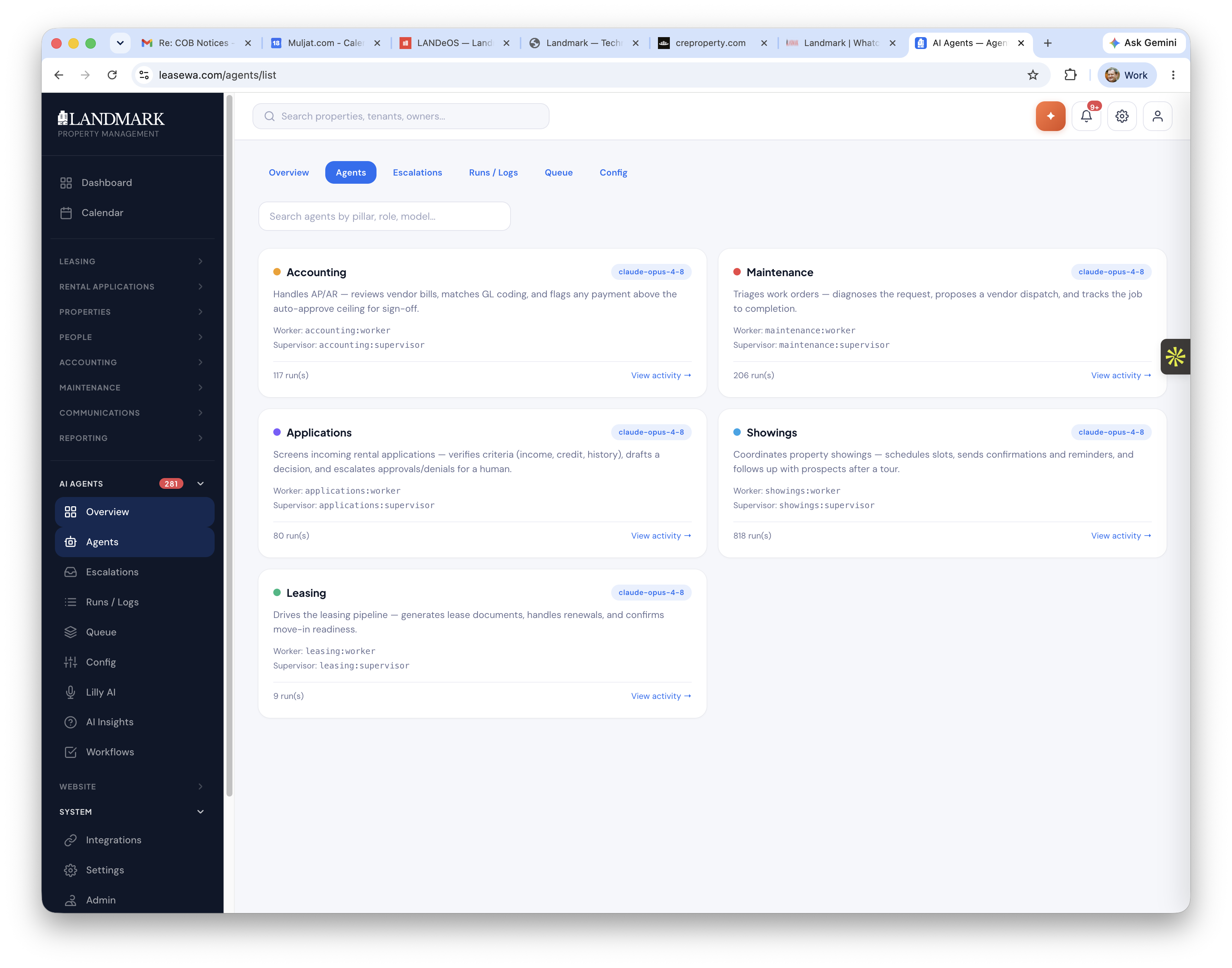
The system takes the repetitive, mind-numbing work off your plate — the data entry, the copy-paste, the chasing, the coding of bills. What it hands back is time — for owners, residents, and the judgment calls only a person should make.

Yes, we're using AI to build and run it — but you're not chatting with a bot all day. Day to day it looks and works like the systems you already use: click, type, done. The difference is it's all in one place, it's ours, and it can do far more.
Screens and flows a lot like AppFolio — no new language to learn.
No more jumping between systems — enter something once and it's everywhere it belongs.
We own it, so we shape it and keep adding — even accounting and the bank are wired in and live.


Lily is our voice assistant. She picks up leasing, showing, and application-status calls, answers the easy ones, and routes the rest to the right person — days, nights, and weekends.
And the system fits the person — each role gets its own dashboard. You open it and see your work: your vacancies, your work orders, your move-ins — not everyone else’s.
Lily takes the routine; you help the person who needs you.
One entry, not three — more time with owners and residents.
First-draft coding and reconciliation done; you approve.
Screening and paperwork move on their own.
Scorecards and KPIs, live — no reports to assemble.
Efficiency isn't the finish line — it's the fuel. The same team handling more doors is how we grow toward 20,000 units across six markets without losing the standard that makes us Landmark.
We audited ourselves — 157 problems, 16 tools, deep tech fog.
Instead of buying tool #17, we built our own agentic system.
Live on our real book, adding the last pieces.
Every team in — running side by side with AppFolio.
We switch over once the new system has earned it.
This is the lab-coat, R&D look. It'll be a lot at once — that's expected.
See something clunky? One click — a bug, an idea, a question, or a shout-out — goes straight to the team to build. You shape it as you use it.
Frame it the way it's meant: this helps the team do their jobs better, not do their jobs for them.
One rule for today: don't get into the weeds. There are a thousand little things we'll tune together over the coming weeks — right now, just watch what's possible.
Same team, same standard, same doors — just less friction, fewer logins, and more time for the work that matters. Let's build it together.